
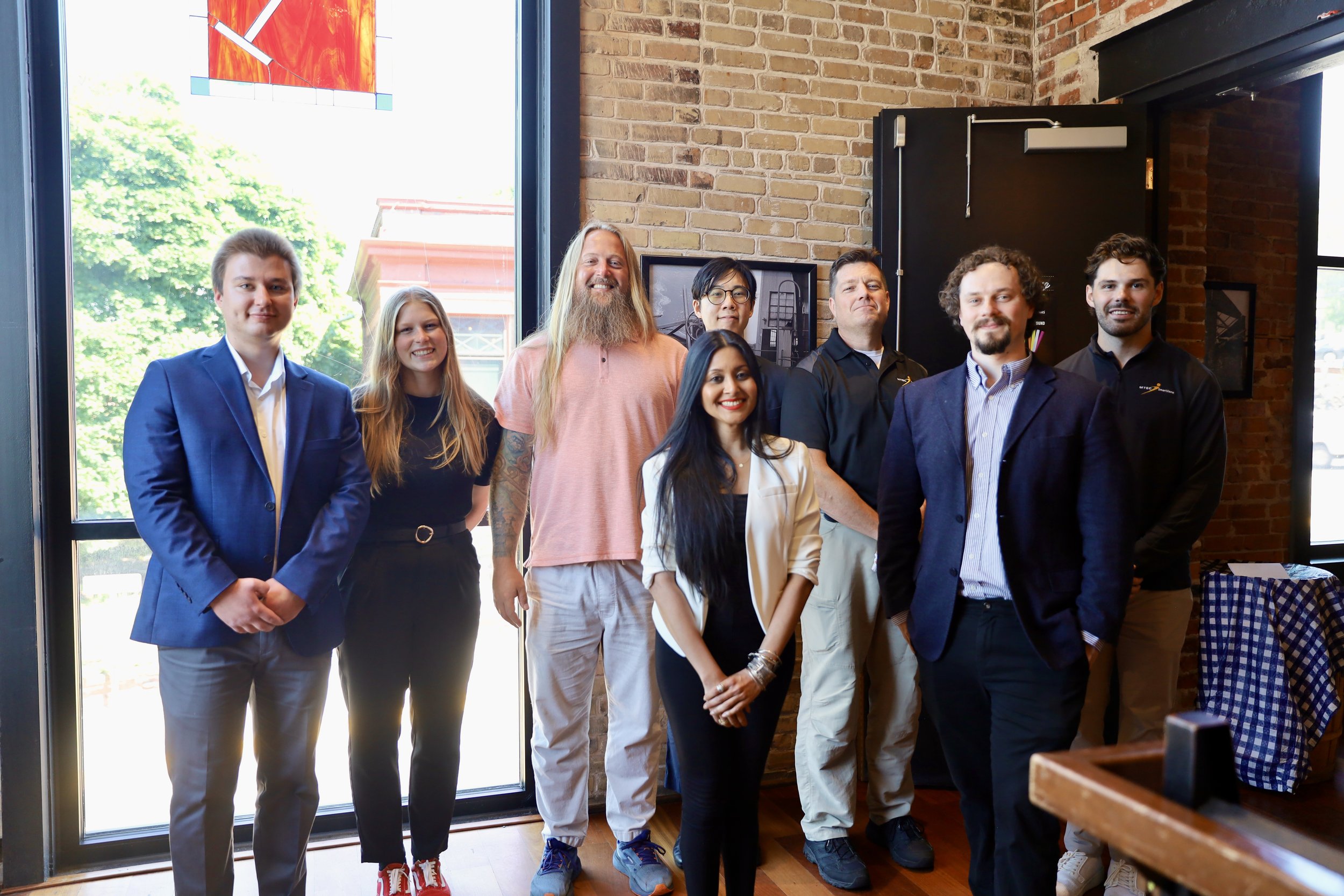
2026 Cohort Companies
-

HELM
āśaya is a human-centered design and innovation company with two divisions, āśaya INNOVATE and āśaya DESIGN. Through their INNOVATE division, āśaya develops products at the intersection of design, construction, and manufacturing. Through this division, they are developing HELM, the first hard hat engineered specifically for women with smart sensing to serve a growing female workforce in the trades.
-

PhaseQ
PhaseQ is an emerging venture that has developed a new class of gyroscope and hybrid between classical and quantum computing to provide a more durable, rugged, and novel positioning system. Using optical quantum states, the company’s core technology leverages optical orbital angular momentum (OAM) and magneto-optical (MO) materials to improve quantum sensing and positional navigation in land, air, and sea environments.
-
PileVision
PileVision automates pile installation monitoring by replacing old processes with a real-time computer vision sensor. This allows site managers to collect accurate, continuous data without relying on scarce and expensive inspectors, which could reduce costs and improve safety on infrastructure job sites.
-

ZiTech
ZiTech is a sustainable manufacturing solution that processes hard-to-recycle waste, like #3-7 plastics, into polymer pellets. The product is combined with contaminated fibers such as pizza boxes, to create pellets that can be used in injection molding and extrusion.
-

SinusBath
SinusBath is developing a powered nasal irrigation device designed to make sinus rinsing more comfortable while also enabling a more thorough rinse, covering hard-to-reach sinus cavities. It is intended for everyday sinus care and is designed to be particularly valuable for people with chronic rhinosinusitis, allergic rhinitis, and post-procedure anatomy. The team is advancing a functional prototype toward a production-ready OTC product.
-
Capture Tech Inc.
CaptureTech deploys modular bioreactor Biochar Capture Packs (BCPs) to intercept nutrient pollution and organic waste in freshwater, stormwater, and nutrient-rich waste streams. The recovered biomass is then upcycled into regenerative fertilizers and soil amendments. This creates a circular economy model that restores microbial biodiversity while addressing and remediating agricultural runoff.